3 min read
Pass the CancellationToken or the Work Continues After the Client Left
ASP.NET Core binds CancellationToken to the aborted request. Forward it to EF Core and HttpClient, and do not turn a client disconnect into a 500.
Theme
System design, modern web development with Next.js, React, .NET, Azure, and practical coding guides.
20 articles
ASP.NET Core binds CancellationToken to the aborted request. Forward it to EF Core and HttpClient, and do not turn a client disconnect into a 500.
How Cache Components in Next.js 16 replace route segment configs with the use cache directive and cacheLife, what becomes a build error, and the cookies-outside-the-cache rule that trips every migration.
TypeScript 7.0 is the native Go compiler, stable since July 2026, with 8 to 12x faster full builds. Deprecations are hard errors, strict and esnext are defaults, and the programmatic API waits for 7.1. A migration order that keeps lint and frameworks working.
Why new HttpClient() in a .NET service exhausts sockets under load, and how IHttpClientFactory plus a named client fixes DNS without freezing the handler forever.
Why key={index} corrupts state when a list is filtered, sorted, or prepended, and which id to use instead.
How to wire useOptimistic with Actions so toggles and comments feel native, roll back on failure, and stay consistent when two mutations overlap.
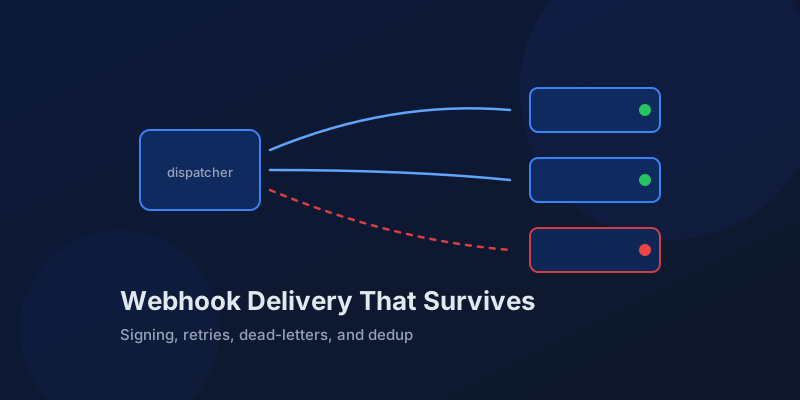
Signing, retries, ordering, and dead-lettering: the design decisions that separate reliable webhook delivery from silent event loss.
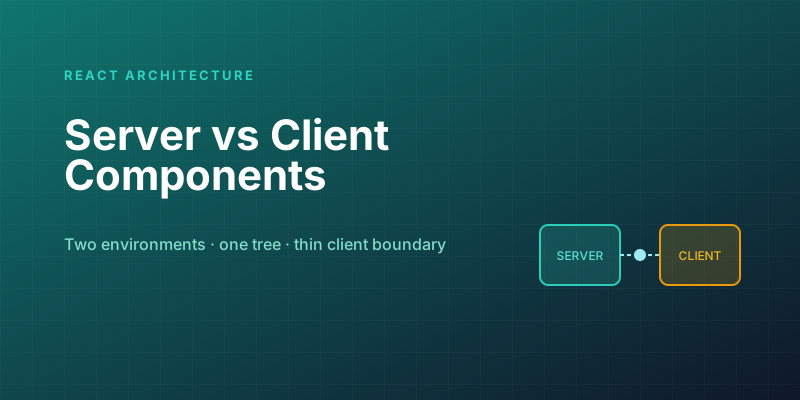
The hardest part of React Server Components isn't the syntax — it's knowing which kind of component you're writing and why. Here is the mental model that makes the boundary obvious.
The like button that responds before the server confirms feels instant. The trick is updating the UI first and reconciling later — and handling the rollback so you never mislead the user.
A synchronous plug-in runs inside the user's transaction with a hard time limit. One slow query or external call can break saves for everyone. Here is how to keep plug-ins fast and safe.
A search box that fires a request on every keystroke, a scroll handler running 60 times a second — these are debounce and throttle problems. The concepts are simple; React makes them subtly tricky.
PPR was the experimental flag in Next.js 15; in 16 it's been folded into Cache Components. Learn how static shells and dynamic holes work, how to migrate incrementally, and how to measure the LCP gains.