4 min read
Elastic Tables in Dataverse: When Cosmos-Backed Storage Beats Standard Tables
What Dataverse elastic tables are, how TTL, partitioning, and JSON columns work, and how to decide between elastic and standard tables.
The Augmented Dev · Archive
Dynamics 365, Power Platform, AI, system design, and web development — filter by theme or search across every post.
Newsletter
One email per post. No spam, no tracking pixels, unsubscribe anytime.
39 of 179 articles tagged dynamics-365-crm
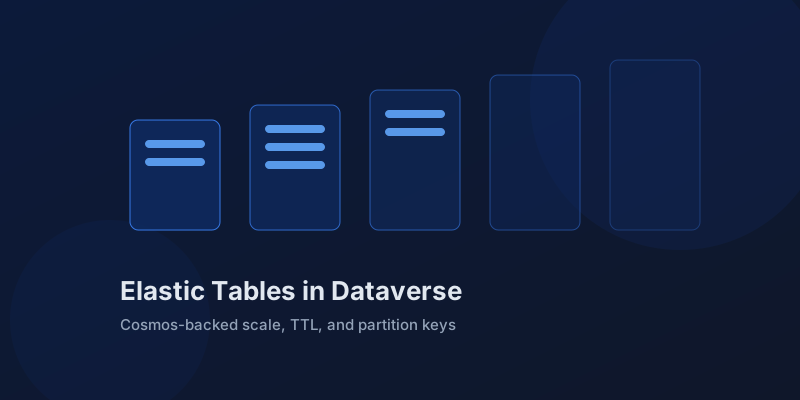
What Dataverse elastic tables are, how TTL, partitioning, and JSON columns work, and how to decide between elastic and standard tables.
A practical guide to designing branching Business Process Flows in model-driven Dynamics 365 apps, with stage-gating, automation hooks, the storage model, and hard limits.
How the Dataverse event pipeline actually works: pre-validation, pre-operation, post-operation stages, the transaction boundary, entity images, depth, and registration guidance.
Modern client-side scripting for model-driven apps using formContext over the deprecated Xrm.Page, with handler wiring, async Xrm.WebApi patterns, and maintainability tips.
A data-modeling guide to Dataverse column types: choice vs multi-select choices vs lookup vs polymorphic customer columns, local vs global choices, status reason, and a decision checklist.
How synchronous and asynchronous classic Dataverse workflows differ in execution, rollback, ordering, and performance, and where Power Automate now fits in.
Construct multipart batch payloads, use changesets for transactional all-or-nothing writes, reference records across requests, and handle service protection limits.
A synchronous plug-in runs inside the user's transaction with a hard time limit. One slow query or external call can break saves for everyone. Here is how to keep plug-ins fast and safe.
Add buttons, write Power Fx visibility rules, target grid form and subgrid locations, pass the selected record, and know when you still need JavaScript libraries.
Enable auditing at org, table, and column level, read audit history, manage retention and storage cost, and lock down sensitive fields with column security profiles.
A practical guide to the lead lifecycle, what qualify creates, the Lead-to-Opportunity BPF, duplicate detection, lead scoring, and rep adoption tips.
Native N:N relationships are quick to set up and impossible to extend. A manual junction table is more work and far more flexible. Choosing wrong means a painful migration later.
A practical primer on case creation, the case resolution BPF, public and private queues, queue items, routing rules, SLAs, and parent-child cases.
A clear mental model for solutions, the dev-test-prod ALM flow, managed properties, solution layers, layering holes, segmentation, and patches.
How to build a Power Pages site over Dataverse — pages, basic vs advanced forms, lists, table permissions, web roles, anonymous vs authenticated access, and Liquid.
How to ground a Copilot Studio agent on Dataverse and other knowledge sources, keep answers cited and security-trimmed, test for hallucination, and choose tools vs knowledge.
A practical guide to Dataverse business units, owner vs access vs group teams, ownership and access levels, hierarchy security, and modeling org structures without BU sprawl.
Practical design guidance for model-driven app views, charts, and dashboards: view types, filtering and sorting, chart aggregation, interactive dashboards, performance, and security.
Compare dual-write, virtual entities, OData, and DMF for Finance and Operations to Dataverse integration with latency and failure tradeoffs.
Learn when to use Dataverse low-code plug-ins with Power Fx for transactional server-side logic, and when C# plug-ins or flows still win.
Build a first Dataverse C# plug-in with IPlugin, pipeline stages, Target handling, tracing, registration, and production-safe practices.
A practical Dataverse logic placement guide comparing business rules, Power Fx, JavaScript form scripts, and C# plug-ins for scale.
Configure Copilot in Dynamics 365 Sales with practical guidance on summaries, email drafting, meeting prep, data readiness, and governance.
Design scalable model-driven app forms with tabs, sections, quick views, business rules, form scripts, security, and performance patterns.
Use Dataverse alternate keys and Web API upsert to build idempotent integrations that match business identifiers, avoid duplicates, and simplify retries.
Compare Dataverse calculated, rollup, and formula columns with practical examples, platform limits, timing tradeoffs, and when plug-ins are safer.
Secure Power Pages data with Dataverse table permissions, access scopes, web roles, column profiles, and testing practices that prevent data leaks.
Configure Dynamics 365 Customer Service SLAs, KPI timers, business hours, pause rules, Power Automate actions, and entitlements without surprises.
Choose OData or FetchXML for Dataverse Web API queries with practical examples for select, filter, joins, aggregation, paging, and performance.
Master Dynamics 365 Customer Service unified routing with skills-based assignment, capacity profiles, and overflow rules to cut handle time and boost CSAT.
An introduction to the Model Context Protocol and how the Dataverse MCP server lets Claude read and write business data through natural language.
A hands-on example of using the Dataverse MCP server with Claude to query tables, create records, and update data in Dynamics 365 through natural language.
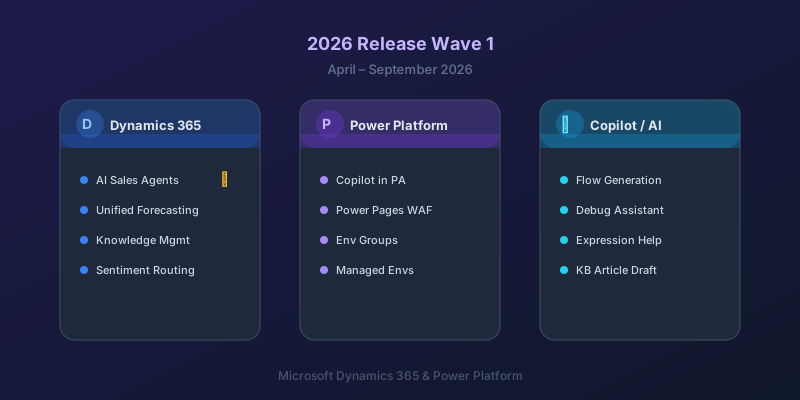
The standout features from Microsoft's 2026 Release Wave 1 for Dynamics 365 and Power Platform, and what they mean for your projects.
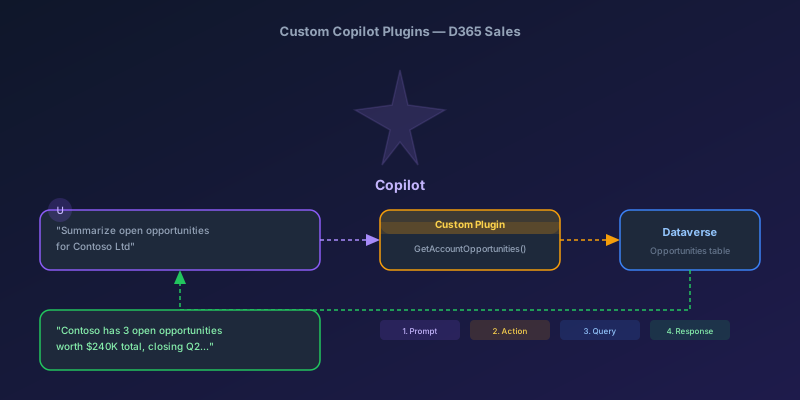
A hands-on tutorial for creating custom Copilot plugins in Dynamics 365 Sales — from defining a custom API to registering a plugin that Copilot can invoke, with real examples and permission gotchas.
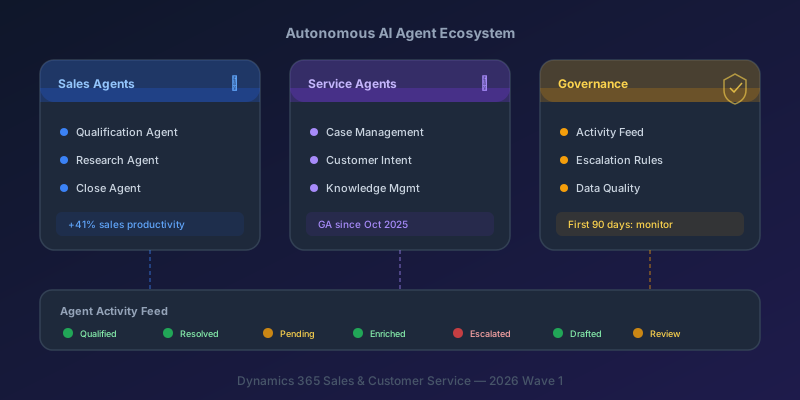
A practical breakdown of the Sales Qualification Agent, Case Management Agent, and the governance framework you need before deploying them.
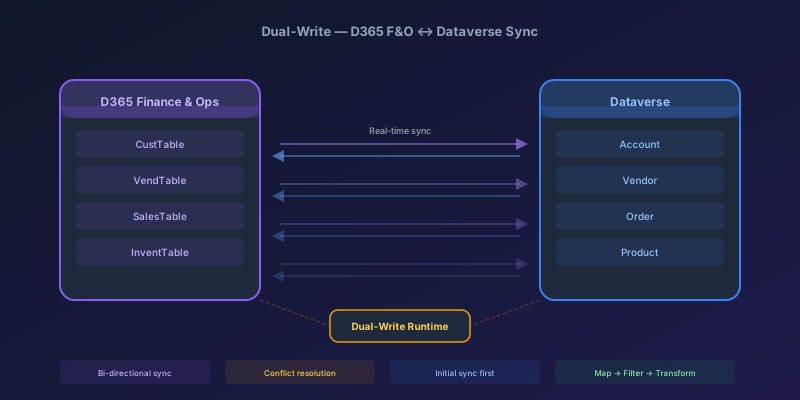
A field-tested guide to dual-write configuration between D365 Finance & Operations and Dataverse — covering initial sync failures, conflict resolution, performance tuning, and when to use alternatives like virtual entities or data export service.
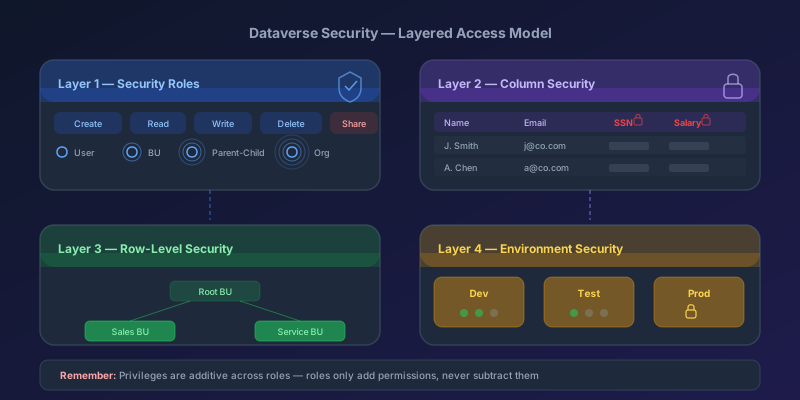
How Dataverse security roles actually work, common mistakes that leave data exposed, and the layered model you should be using in 2026.
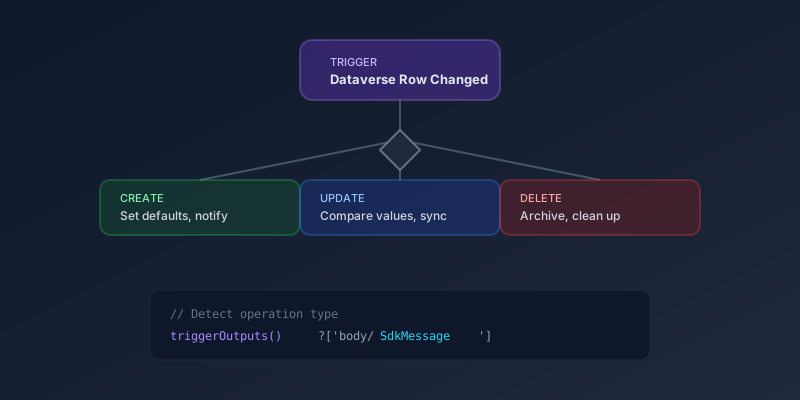
How to distinguish between create and update operations in Dataverse-triggered flows and implement conditional logic accordingly.
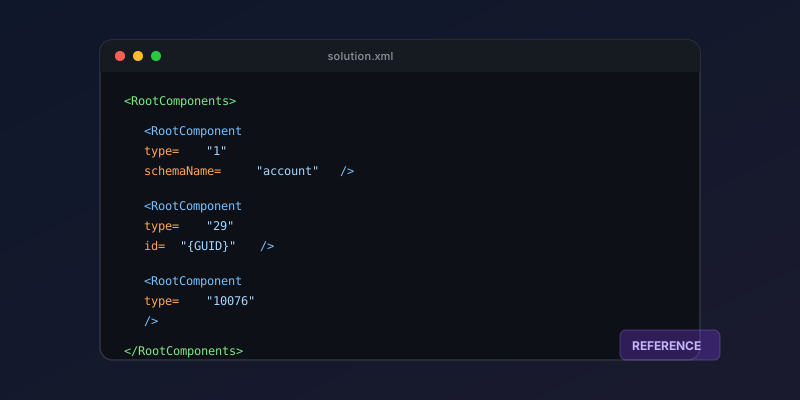
A practical reference for solution component types, their IDs, and how to work with solution XML in Dynamics 365 and Power Platform.